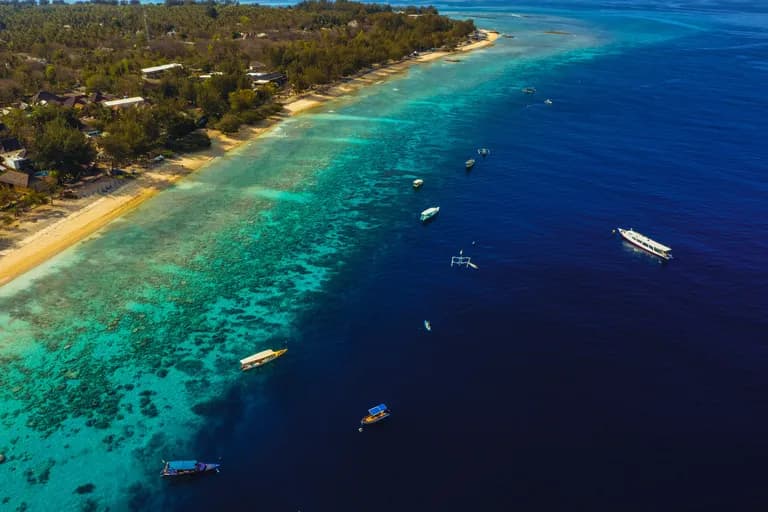
Bali has long been one of Indonesia’s most established property markets, attracting buyers looking for holiday homes, rental villas, land, and long-term investment opportunities. But as the island continues to mature, attention is increasingly moving beyond Bali toward the wider Indonesian archipelago.
Two destinations are attracting particular interest: Lombok in West Nusa Tenggara (NTB) and Sumba in East Nusa Tenggara (NTT). Both offer beautiful coastlines, growing tourism potential, and opportunities for property investment. But they are at very different stages of development.
Lombok property investment is already supported by growing visitor numbers, improving connectivity, the Mandalika development, and an expanding tourism ecosystem. Sumba, meanwhile, remains a much smaller and more emerging market, where the opportunity is closely connected to land, boutique hospitality, luxury tourism, and long-term development.
For investors considering property investment in Lombok and Sumba, understanding these differences is important. And as Betterplace expands beyond Bali into these two destinations, we are taking a closer look at what is happening on the ground and what this means for the property market.
Why Look Beyond Bali for Property Investment?
Bali remains one of Indonesia’s most established international tourism and property destinations. That maturity creates advantages, but it also means investors are looking at other parts of the country for the next stage of growth. Lombok and Sumba offer a different starting point.
There is more room for new development, particularly in emerging tourism areas. At the same time, both destinations already have established attractions that are bringing international travellers to their shores. The important point is that neither market should simply be treated as “the next Bali.”
Lombok real estate and Sumba real estate have their own demand patterns, infrastructure, tourism profiles, and investment considerations. For investors, that can create opportunities but it also means doing proper research before buying land or property.
Lombok Property Investment: A Market Moving Forward
Among the two destinations, Lombok currently has the more developed tourism and property ecosystem. The data points to increasing activity across several areas.
Lombok airport recorded approximately 1.3 million passengers during the first half of 2026, up 16.6% year-on-year. Aircraft movements increased by 30.7%, while airport cargo volume rose by 27.5%. Foreign arrivals through the airport in April 2026 were also up 11.2% year-on-year. The Mandalika area is also seeing increased visitor activity. According to ITDC, The Mandalika recorded 685,844 tourist visits during the first half of 2026, representing a 17.39% increase from the same period in 2025. Average occupancy also increased from 44.94% to 50.95%.
For investors researching Lombok real estate investment, this growing activity matters because tourism is one of the key drivers behind demand for accommodation, hospitality, and supporting businesses. The growth is not limited to Mandalika itself. West Lombok recorded 444,627 tourist visits in 2025, compared with 320,658 in 2023. The composition of visitors also changed significantly, with international visitors making up a larger share of total visits. Together, these numbers point to a market that is becoming more active.
The Mandalika Effect
When discussing property investment in Lombok, Mandalika is difficult to ignore. The Special Economic Zone has become one of the island’s most important tourism anchors, particularly through major sporting and entertainment events. The 2025 MotoGP event attracted approximately 142,000 spectators, while Mandalika is also confirmed on the 2026 MotoGP calendar.
The development of the area also brings infrastructure, hospitality, and commercial activity that can influence surrounding locations. For property investors, however, this does not necessarily mean buying directly inside Mandalika is the only option. The wider corridor, including areas such as Kuta Lombok, Selong Belanak, Mawi, and Gerupuk, is where private residential and hospitality development is taking place. This creates a broader way to look at Lombok property investment; not simply as an investment in one tourism zone, but as participation in the growth of an expanding destination.
Connectivity is an Important Part of the Story
Property markets are closely connected to accessibility. Lombok's air connectivity has been developing alongside passenger growth. The research points to additional connections involving destinations such as Singapore, Jakarta, Banyuwangi, Malang, and Labuan Bajo, while other potential international routes have also been discussed.
The Indonesian government is also positioning NTB as an area for further investment across tourism and other sectors. In June 2026, the provincial government highlighted tourism projects including premium accommodation opportunities around Mandalika, Gili Gede, and Pantai Kerakas. For someone considering buying property in Lombok, this combination of tourism activity, infrastructure development, and investment interest provides an important backdrop.
As an emerging market, each area can offer a different investment landscape, so factors such as location, access, land title, surrounding development, and rental demand are worth considering alongside broader market trends.
Explore Lombok Property Opportunities →
Sumba Property Investment: A Different Kind of Opportunity
If Lombok is moving into a more established growth phase, Sumba property investment is a much earlier-stage story. The island has gained international attention through its beaches, landscapes, surfing, culture, and luxury hospitality. But visitor numbers remain relatively small compared with mature tourism destinations.
In Sumba Timur, for example, the local tourism authority recorded 41,524 tourist visits in 2025, including 36,242 domestic visitors and 5,282 international visitors. The average length of stay was around three nights. During January to June 2026, Sumba Timur recorded 20,460 visits, including 2,058 international visitors. Local authorities are working to improve connectivity, infrastructure, tourism packages, and destination development, with the aim of extending visitor stays.
These numbers are useful for putting the opportunity into perspective. Sumba is still a relatively developing tourism market, with room for its visitor economy and property landscape to grow over time. And that is part of what makes the island different.
The Appeal of Sumba Real Estate
The Sumba property market is being shaped less by mass tourism and more by a premium, nature-led destination concept. The island already has internationally recognised luxury hospitality names, including Nihi Sumba and Cap Karoso, helping establish Sumba as a destination associated with high-end travel and nature-based experiences. The availability of larger land parcels and relatively low development density also adds to the island’s appeal for investors exploring land and hospitality projects.
This creates a different kind of Sumba real estate investment opportunity. Rather than focusing solely on short-term rental performance, investors may be looking at land for a future private residence, boutique villa, small hospitality project, or longer-term development. This also means the investment horizon can be an important consideration. Sumba is still taking shape as a destination, so understanding the location, surrounding development, access, and potential demand can help investors assess opportunities within the context of the island’s evolving property market.
Lombok vs Sumba Property Investment
Lombok currently has stronger tourism activity, more developed infrastructure, and a growing rental and hospitality ecosystem. Areas around Mandalika and South Lombok are already seeing significant interest in villas, accommodation, and land.
Sumba, by comparison, has a much smaller visitor base and less developed infrastructure. Its appeal is more closely connected to land, exclusivity, luxury tourism, and long-term development.
That difference is worth considering when looking at property investment in NTB and NTT. An investor seeking a property that can potentially enter an existing tourism ecosystem may approach Lombok differently from someone looking at a longer-term land or development opportunity in Sumba. Neither should be evaluated simply on a headline price or projected return.
Compare Lombok & Sumba Properties →
What Investors Should Consider Before Buying
Emerging markets can offer opportunities, but they also require careful due diligence. Land ownership and certification should be checked thoroughly before any transaction. In Lombok, understanding the history and ownership background of land around areas such as Mandalika can be an important part of the due diligence process. In Sumba, customary or adat considerations may also form part of the land review, making it useful to look beyond formal documentation and understand the wider land context.
Infrastructure is another consideration. Lombok benefits from an airport with growing traffic and expanding connectivity, while Sumba remains more dependent on domestic connections. Connectivity can directly influence tourism demand and therefore the performance of hospitality properties. Investors should also be careful with projected rental yields and land appreciation figures.
The research reviewed for this article did not find independent confirmation for some frequently cited figures, including gross rental yields of 12–16% or annual land appreciation of 15–25%. These figures may be useful as projections or market expectations, but they are best considered alongside property-specific data and current market conditions rather than as established market benchmarks.
The same approach can be applied to visitor numbers. Overall tourism growth can provide useful context, while factors such as the specific destination, visitor profile, seasonality, and length of stay can give a clearer picture of how that growth may translate into demand for a particular property.
Betterplace Expands Beyond Bali
As the property landscape across Indonesia continues to develop, Betterplace is expanding its presence beyond Bali into Lombok and Sumba. The expansion brings our experience across real estate, property management, vacation rentals, and hospitality operations into two destinations with very different opportunities.
For buyers, this means being able to explore property opportunities in Lombok and Sumba with a team that understands the wider Indonesian property market. For property owners, it also creates the possibility of combining property acquisition with professional management and rental operations as the local markets continue to develop.
Our approach remains the same; understand the property, understand the location, and build an investment strategy around realistic market conditions.
Looking Ahead to Lombok and Sumba
The opportunity in NTB and NTT property investment is not about finding another Bali. It is about understanding what is developing in each destination today and what that could mean for property owners in the years ahead.
Lombok is already showing measurable growth in airport activity, tourism visits, Mandalika activity, and investment. Sumba remains much smaller, but its premium tourism positioning, natural environment, and developing infrastructure are creating interest in land and hospitality projects. For investors, the next step is not simply choosing between Lombok and Sumba. It is identifying the right location, property type, ownership structure, investment horizon, and operating strategy for the opportunity.
As Betterplace expands into both destinations, we are building our local presence to help buyers and property owners navigate these emerging markets with a closer understanding of the opportunities on the ground. Looking for property investment opportunities in Lombok or Sumba? Talk to Betterplace about available land, villas, and real estate opportunities across NTB and NTT.
Explore Lombok & Sumba Properties →
Sources:
-
BPS NTB — Monthly releases on foreign arrivals via Zainuddin Abdul Madjid Airport
-
InJourney Airports / Lombok airport — H1 2026 traffic results
-
ITDC and the National SEZ Council — Mandalika SEZ investment and visitor figures
-
DPMPTSP NTB — Realised investment by province and sector
-
West Lombok Regency Government — Visitor statistics 2023–2025
-
East Sumba Tourism and Culture Office, via ANTARA — Sumba visitor numbers
-
Ministry of Tourism — Distribution of tourism investment and priority destinations
-
Lombok and Sumba Agency Publications — Price benchmarks, labelled as marketing